
Opening
MC Jim Fishwick, together with members of the NDF Board, opens Day 2 of the conference.
We’ll also share an overview of the Birds of a Feather sessions happening in the afternoon.
Keynote Address \ Ash Mann
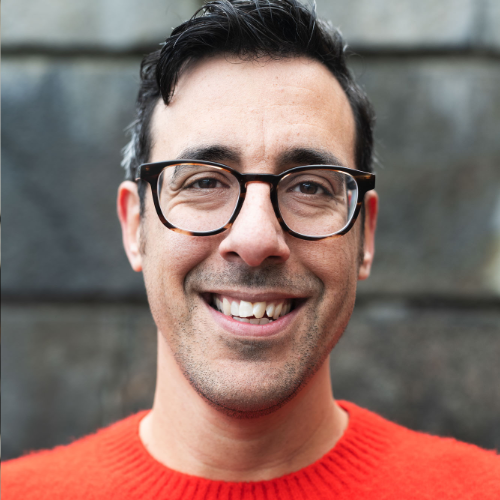
Ash Mann has spent most of the last couple of decades inside the world of digital in cultural organisations - in-house, as an agency director, and now as an independent consultant. He works with leaders, teams, and organisations across Europe and North America on challenges that usually involve a messy combination of people, strategy, technology, and change.
He spends a lot of time thinking about the conditions that surround digital work and each year he explores a question about what makes digital work, or not. Last year it was failure, this year it’s the invisible labour that nobody budgets for or understands.
He hosts the Digital Works podcast, writes a weekly newsletter, and lives in Göteborg on the west coast of Sweden with his wife and their new baby.
From Digital Skills to Digital Behaviour: Rethinking Digital Citizenship in the Age of AI \ Ahmad Ghandour
Digital literacy programmes have existed for decades. Yet people and institutions continue to face misinformation, phishing, unsafe data practices, AI misuse, and declining trust in digital environments.
This plenary argues that digital literacy must now move beyond technical skills, confidence, and knowledge alone. In the age of AI, digital literacy brings together Digital Skills, Cybersecurity Awareness, and AI Competency. These domains enable people to use digital systems, protect information and communities, and judge AI-generated outputs, recommendations, and actions.
The presentation introduces Knowledge, Capability, and Reflection as three forms of evidence for understanding digital literacy. Knowledge concerns what people understand. Capability concerns what they can do in authentic digital situations. Reflection concerns how they explain, evaluate, and justify their decisions. This approach shifts assessment from what people say they know toward observable behaviour and responsible judgement.
The plenary also connects digital literacy with digital citizenship. Digital literacy asks whether people can act effectively in digital environments. Digital citizenship asks whether those actions are responsible toward other people, communities, institutions, culture, and society.
For galleries, libraries, archives, museums, iwi organisations, and records institutions, this shift has direct implications for AI-generated metadata, collection access, cybersecurity, cultural authority, provenance, restricted knowledge, community consultation, public trust, and sustainable digital practice.
The session introduces the International Digital Driving License, or IDDL, as an operational framework for assessing Digital Skills, Cybersecurity Awareness, and AI Competency through Knowledge, Capability, and Reflection. A related hands-on workshop will allow participants to explore the IDDL through realistic tasks, behavioural evidence, decision-making activities, and reflective assessment in GLAMMIR contexts.
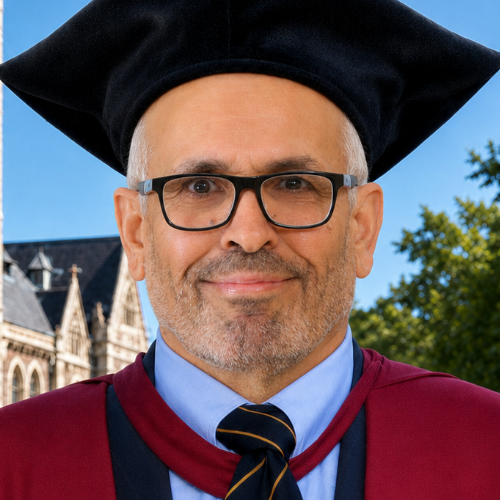
Ahmad Ghandour is an Adjunct Professor of E-Business and Information Systems with more than twenty years of teaching, research, and academic leadership experience across New Zealand, the United Arab Emirates, Jordan, Australia, and the United Kingdom. He completed his PhD at the University of Otago.
His recent work focuses on digital literacy, artificial intelligence competency, cybersecurity awareness, digital transformation, and behaviour-based assessment. He is the creator of the International Digital Driving License, or IDDL, a digital capability framework designed to assess what people know, what they can do, and how they reflect on their decisions in realistic digital environments.
His current work examines how digital capability can support responsible digital participation, institutional trust, and professional practice in the age of AI.
Asking the Shelves: How a District Council Library Built an AI Analyst from 14 Million Transactions \ Angela Jowitt, Andrew Terwiel, Eric Bonhomme
New Plymouth District Council's library network generates millions of circulation transactions each year — checkouts, returns, renewals, holds, and transits — across seven branches and over 1,600 collection categories. Historically, turning this data into timely insight required specialist SQL skills and significant staff time.
In 2025–26, we deployed a natural-language AI analyst built on Snowflake Cortex, enabling library staff to ask plain-English questions of 14.7 million transactions spanning 2018 to today. The system uses a semantic model that maps library business concepts (collections, branches, transaction types) onto a cloud data warehouse, allowing questions like "Which collections are growing in popularity year-on-year?" or "Which branches borrow the most from other branches?" to return accurate, contextualised answers in seconds.
This presentation shares what worked, what surprised us, and what we learned — including the critical importance of semantic modelling, the unexpected queries staff actually asked versus what we anticipated, and how democratising data access shifted conversations from anecdote to evidence. We'll discuss the collaboration between library operations, IT, and Snowflake's AI platform developed by Qrious, and offer practical guidance for other GLAM organisations exploring AI-assisted analytics.
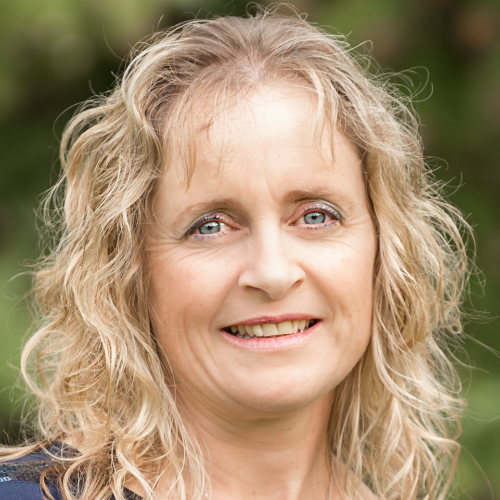
Angela Jowitt has a background as a Digital Library Specialist and now manages the Puke Ariki and Community Libraries. She is leading this project to bring better insights to Libraries through data and digital initiatives. NPDC's library network spans seven branches from Puke Ariki to the New Plymouth Mobile Library. With a focus on making operational data accessible and actionable, she has championed the adoption of AI-powered analytics to support evidence-based collection and service decisions.
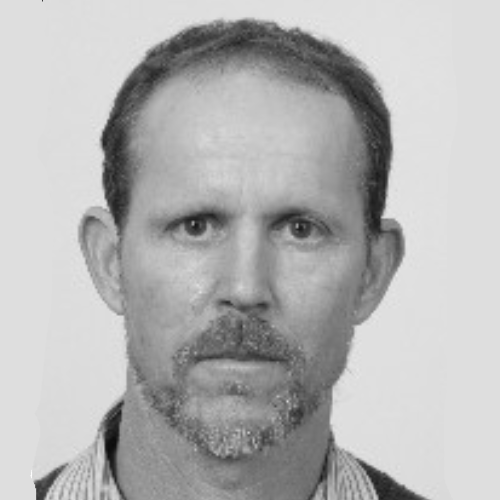
Andrew Terwiel is a Data Engineer with New Plymouth District Council's Data & GIS team. Passionate about solving complex data challenges, he helps design and maintain the systems, integrations, and data pipelines that underpin reporting, analytics, and business intelligence across Council. Andrew enjoys turning data into practical outcomes and works collaboratively with colleagues to ensure information is accurate, accessible, and supports better decisions for the community.
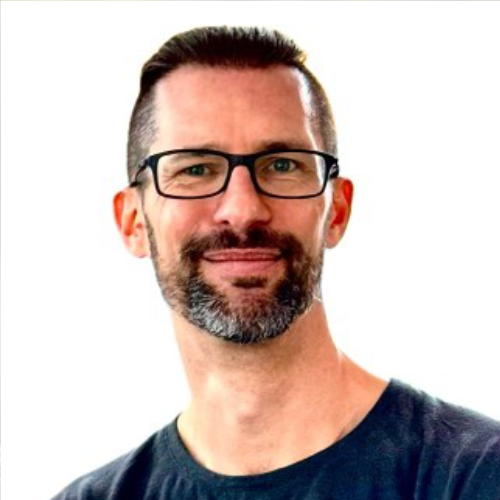
Eric Bonhomme is Spark | Qrious’ AI Practice Lead, where he leads the development of enterprise AI solutions that help organisations deploy AI safely, responsibly, and at scale.
He is also completing a Master of Artificial Intelligence by research at the University of Auckland, where his research focuses on Ethical Goal Decomposition, a novel framework for improving the evaluation, explainability, and governance of enterprise AI agents.
Preserving DVDs: Agentic AI to the rescue \ Tom Ackroyd
This illustrated talk will describe the successful implementation of an AI-assisted workflow in AV digital preservation.
AV Preservation staff at Ngā Taonga Sound & Vision were recently tasked with preserving a collection of DVD-Video recordings.
At the time we had few established protocols for preservation of DVDs. This issue arose during a project to digitise and preserve a recent nationally significant audiovisual deposit. Resolving this supported our mission to make audiovisual taonga accessible before the original carriers deteriorate beyond rescue.
After reaching consensus on how digital materials derived from DVDs would fit into our established preservation frameworks, the workflow’s design and testing phase hinged on the use of ChatGPT to write a shell script to faithfully extract digital files. Later use of the command-line agent Claude Code extended and formalised both the script and associated GitHub repository. This helped fix many edge-cases and anomalies that arose during the processing of the collection.
Without clear preservation protocols and workflows, audiovisual taonga are at risk. Appropriate collaboration with chatbots and agentic AI in writing code can assist archival institutions where in-house coding experience is limited. This project ensured long-term access to these taonga and established a model for future preservation initiatives.
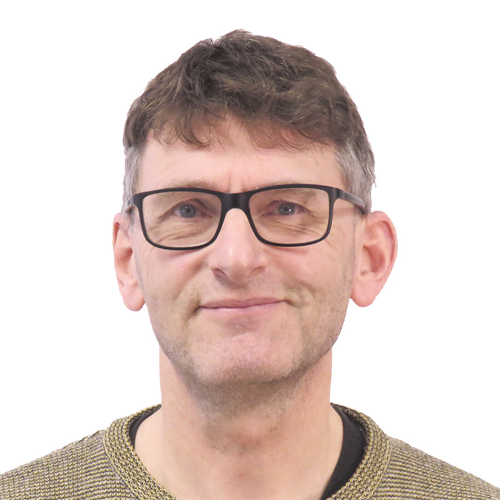
With a 40-year background in broadcast television, advertising and video editing, Tom Ackroyd came to Ngā Taonga Sound & Vision in 2016 as a born-digital collector. In 2020 he moved to the Preservation Team where he works to digitise and preserve a broad range of magnetic tape and optical disk audiovisual formats. His favourite format is DVCAM.
Tom lives in Matairangi Mount Victoria in Te Whanganui a Tara Wellington, with his wife Viv and their dog Fred. He is a keen choral singer, photographer and film-goer.
Our first decade – 10 years of born digital records transfers, reflection and future plans \ Jan Hutař, Carly Lenz
Our presentation will reflect on a decade of accepting and processing transfers of born-digital records from government agencies to Archives New Zealand. It traces the evolution of transfer workflows, highlighting key improvements in processes, tools, and collaboration with agencies.
Drawing on operational experience, we identify common digital preservation challenges, including file format issues, metadata quality, and managing scale. We discuss the tools and practices developed to support ingest, validation, and long-term preservation, as well as lessons learned in balancing standardisation with the diverse contexts of transferring agencies.
The presentation will also outline approaches to improving agency readiness, including guidance, engagement, and technical support. Finally, we present planned enhancements to transfer processes, with a focus on greater automation.
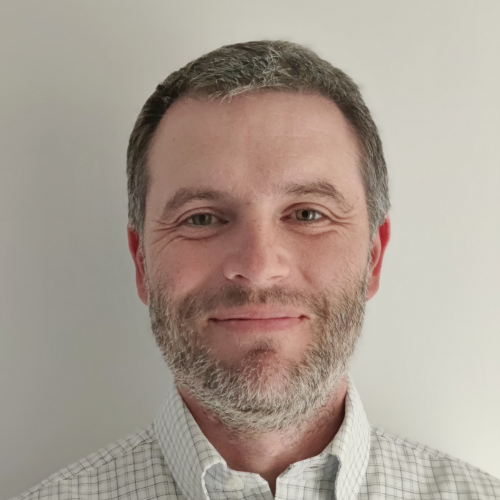
Jan Hutař has a PhD in Information Science, an MA in Information Studies and Librarianship, and a BA in Archival Studies. His career has involved experience in web archiving, digitisation workflow and metadata design, but his focus has been on preservation metadata and the digital preservation field. As a Digital Preservation Analyst at Archives New Zealand, Jan is responsible for developing digital preservation policies and processes, file format technical analysis, digital preservation system management, providing advice to government agencies regarding digital records management and born-digital record transfer.
Carly Lenz is a Digital Preservation Analyst at Archives New Zealand. Carly helps manage the Government Digital Archive (GDA), Archives’ long-term digital preservation system, and contributes to policy development, strategy, and digital transfer planning. Carly liaises with internal depositors to optimise workflows and ensure proper access to authentic intellectual content held in the GDA.
No money, no resources! How can collaboration help preserve Pacific Cultural Heritage for future generations \ Taputukura Raea
The Pacific faces many challenges in preserving cultural heritage. Through Digital Pasifik, we have seen these realities firsthand, the Pacific GLAM sector working with limited funding and resources to protect their stories, languages, and knowledge. This raises an important question: when resources are scarce, can collaboration be the solution? By working together, sharing skills, knowledge, and tools. We can strengthen preservation efforts and ensure Pacific cultural heritage is protected for future generations.
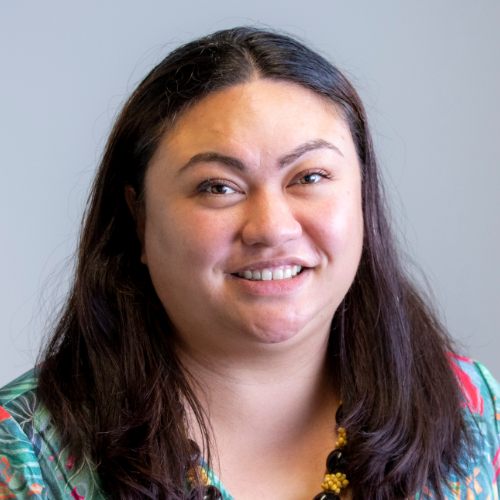
Taputukura Raea is of Cook Islands descent, with links to Mauke, Pamati, Rarotonga and Manihiki. She is the Programme Manager for Digital Pasifik at the National Library of New Zealand in Wellington, where she leads the platform and its initiatives. Her work focuses on improving access to Pacific taonga held overseas, connecting communities with their heritage. Digital Pasifik bridges the GLAM sector and Pacific communities, supporting reconnection and cultural continuity. With a strong background in community engagement, Taputukura is passionate about fostering Pacific-led connections to culture, history and heritage through respectful collaboration.
Panel: What didn't work (and what we did next) \ Mark Crookston, Gareth Watkins, Nik Crombie, Kate Button, Catherine Leonard
We hear from four GLAM leaders, each telling the story of one digital challenge that didn’t go to plan - and what they did next.
Facilitator:
Mark Crookston, Director, Digital, National Library of New Zealand and Archives New Zealand
Panellists:
Gareth Watkins, Founder, Pride NZ
Nik Crombie, Digital Research Services Coordinator, Te Herenga Waka VUW
Kate Button, Group Manager Share & Promote Pou Tūhono, Ngā Taonga Sound & Vision
Catherine Leonard, Head of Library and Learning Services, Auckland Council Libraries
Birds of a feather discussions
The Birds of a Feather discussions are guided, small-group breakout sessions. Gather and discuss your thoughts on the themes that resonated with you most throughout the conference or bring your current challenges to the table.
Some topics will be pre-determined, and there will also be the opportunity to create new groups.
Afternoon Tea
We take a short break for afternoon tea before settling in for the final presentation.
There will be a karakia for the food - please wait for this before eating.
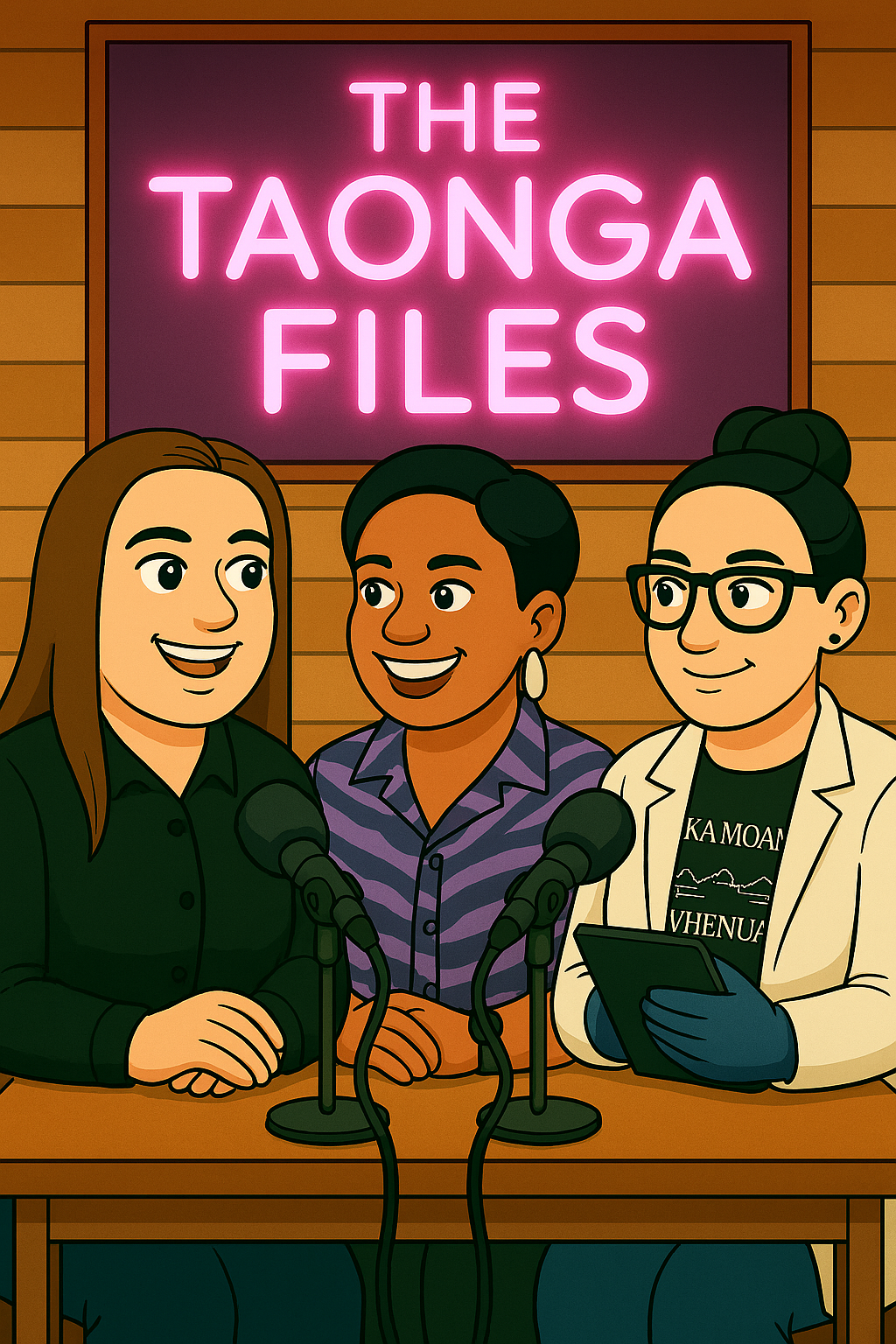
Tātai hononga: The Taonga Files LIVE @ NDF26 \ Amber Aranui, Migoto Eria
In this live episode of The Taonga Files, Amber Aranui and Migoto Eria bring the NDF26 community together for a gentle, thoughtful conversation about the human side of digital mahi.
This episode is named, Tātai hononga which evokes reflection and connection, and resonates with The Taonga File’s mission: centering on reconnection and how uncovering provenance restores whakapapa, returns mana to taonga and strengthens the bonds between museums and Indigenous communities.
“Tātai hononga is our connection through the constellation of whakapapa and taonga Māori as inspiration for the rangahau we have experienced and shared throughout this podcast series.” Amber and Migoto will reflect on the relationships, stories, and shared responsibilities uncovering the histories, journeys and stories behind taonga Māori held in museum collections and around the world.
This live session invites attendees to reflect on individual practices and the connections that sustain them. It’s a chance to pause, breathe, and consider how we might continue strengthening hononga across our institutions, communities, and digital spaces.
Amber Aranui (Ngāti Kahungunu, Ngāti Tūwharetoa) is a curator, researcher, and storyteller whose mahi centres on reconnecting taonga and kōrero with the people they belong to. After many years with the Karanga Aotearoa Repatriation Programme, she continues to work alongside communities to trace journeys, fill gaps, and bring ancestral stories back into the light. At Te Papa, Amber blends archaeology, mātauranga Māori, and detective‑coded provenance research to uncover relationships hidden in archives and collections. Her work is driven by connection - between people, places, and histories - and the belief that every taonga carries a story worth returning home.
Migoto Eria has over 15 years' experience working in museums across Aotearoa, specialising in the care, research, and interpretation of taonga. She is of Ngāti Pāhauwera, Ngāti Ruapani, Ngāti Huia and Japanese descent, with her whānau originating from Itami in Hyōgo Prefecture, Japan. A fluent speaker of te reo Māori, Migoto has worked alongside iwi and hapū throughout Aotearoa, supporting kaupapa grounded in mātauranga, kaitiakitanga and meaningful community partnerships. Throughout her career, Migoto has held senior leadership roles including Head of Mātauranga Māori at Te Papa Tongarewa and Manager Iwi Development for National Services Te Paerangi. She also serves as a trustee of the Wairoa Museum. Migoto is currently a consultant for Space Place at Wheako Pōneke, Experience Wellington.
Conference closing remarks
Conference Co-Convenor Valerie Love delivers the closing remarks for NDF26.
Conference end
That’s it! Thank you for joining us at NDF26!
See you next time - or see you tomorrow for the workshop day.