
Digital literacy programmes have existed for decades. Yet people and institutions continue to face misinformation, phishing, unsafe data practices, AI misuse, and declining trust in digital environments.
This plenary argues that digital literacy must now move beyond technical skills, confidence, and knowledge alone. In the age of AI, digital literacy brings together Digital Skills, Cybersecurity Awareness, and AI Competency. These domains enable people to use digital systems, protect information and communities, and judge AI-generated outputs, recommendations, and actions.
The presentation introduces Knowledge, Capability, and Reflection as three forms of evidence for understanding digital literacy. Knowledge concerns what people understand. Capability concerns what they can do in authentic digital situations. Reflection concerns how they explain, evaluate, and justify their decisions. This approach shifts assessment from what people say they know toward observable behaviour and responsible judgement.
The plenary also connects digital literacy with digital citizenship. Digital literacy asks whether people can act effectively in digital environments. Digital citizenship asks whether those actions are responsible toward other people, communities, institutions, culture, and society.
For galleries, libraries, archives, museums, iwi organisations, and records institutions, this shift has direct implications for AI-generated metadata, collection access, cybersecurity, cultural authority, provenance, restricted knowledge, community consultation, public trust, and sustainable digital practice.
The session introduces the International Digital Driving License, or IDDL, as an operational framework for assessing Digital Skills, Cybersecurity Awareness, and AI Competency through Knowledge, Capability, and Reflection. A related hands-on workshop will allow participants to explore the IDDL through realistic tasks, behavioural evidence, decision-making activities, and reflective assessment in GLAMMIR contexts.
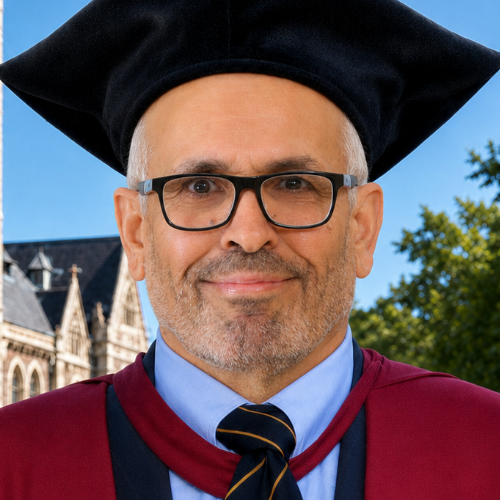
Ahmad Ghandour is an Adjunct Professor of E-Business and Information Systems with more than twenty years of teaching, research, and academic leadership experience across New Zealand, the United Arab Emirates, Jordan, Australia, and the United Kingdom. He completed his PhD at the University of Otago.
His recent work focuses on digital literacy, artificial intelligence competency, cybersecurity awareness, digital transformation, and behaviour-based assessment. He is the creator of the International Digital Driving License, or IDDL, a digital capability framework designed to assess what people know, what they can do, and how they reflect on their decisions in realistic digital environments.
His current work examines how digital capability can support responsible digital participation, institutional trust, and professional practice in the age of AI.